


Bathroom Ventilation System: Exhaust Fan vs Heat Recovery Ventilator (HRV)
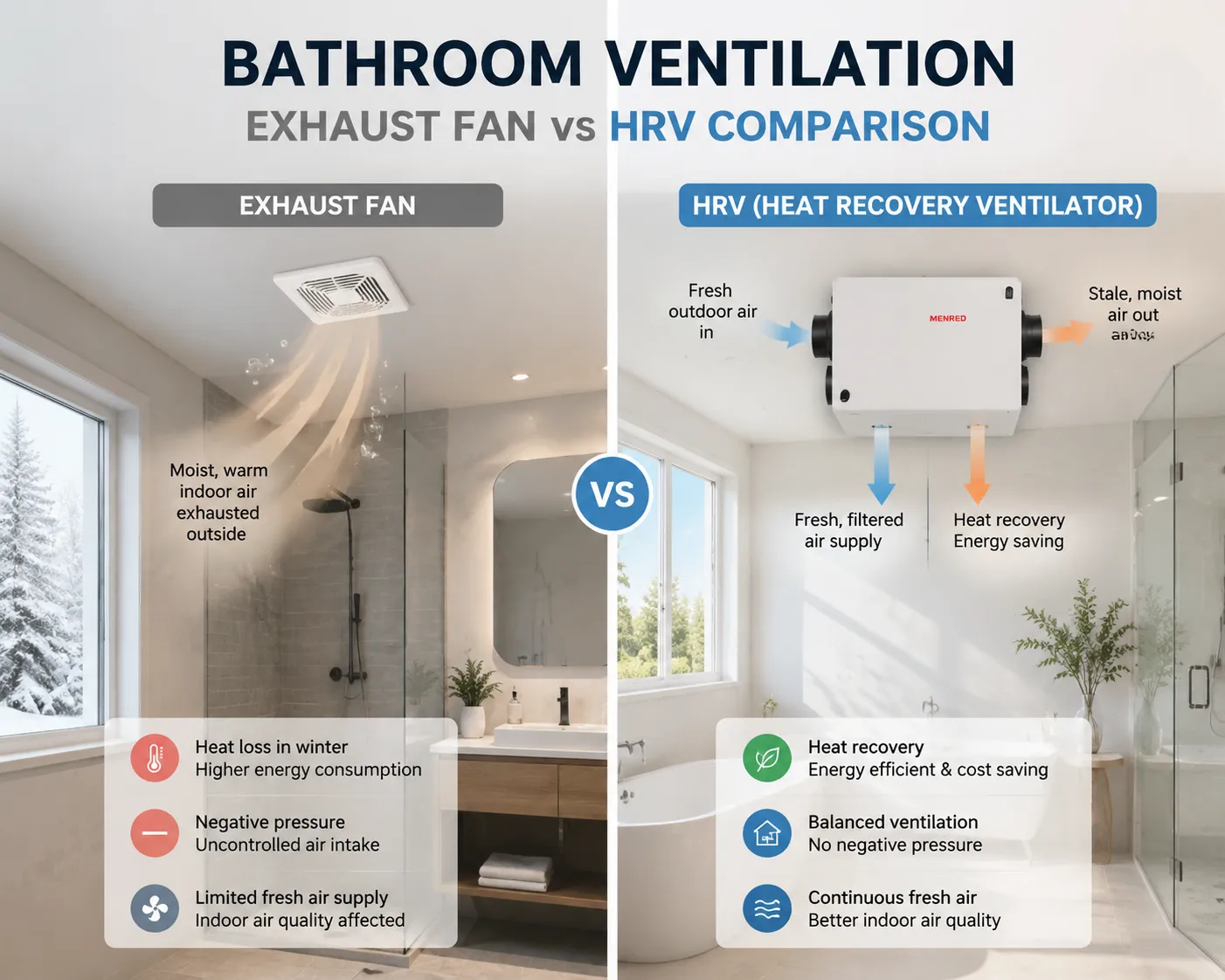
A bathroom is one of the most moisture-sensitive areas in any building.
Every shower, bath, and hot water usage releases a large amount of humidity into the indoor environment. Without effective ventilation, excess moisture can accumulate and cause problems such as condensation, mold growth, unpleasant odors, and damage to interior materials.
For many years, the traditional bathroom extractor fan has been the most common solution. It removes humid air from the bathroom and exhausts it directly outdoors.
However, as modern buildings become more airtight and energy-efficient, ventilation requirements are changing. Simply removing indoor air is no longer enough. Buildings increasingly require solutions that can provide fresh air, control humidity, and reduce unnecessary energy loss.
This is why heat recovery ventilation (HRV) systems are becoming increasingly popular for residential renovations, apartments, hotels, and energy-efficient buildings.
So, what is the difference between a bathroom exhaust fan and an HRV system? And which ventilation solution is more suitable for modern buildings?
Why Bathroom Ventilation Is Important
Bathrooms generate high humidity levels in a short period of time.
Common sources include:
- Hot showers and steam;
- Wet towels and surfaces;
- Limited natural ventilation;
- Poor air circulation.
Without proper ventilation, high humidity can lead to:
- Condensation on mirrors and windows;
- Mold growth on walls and ceilings;
- Unpleasant smells;
- Reduced indoor air quality.
An effective bathroom ventilation system should achieve three goals:
- Remove humid and polluted air;
- Provide fresh air circulation;
- Maintain indoor comfort while minimizing energy loss.
The challenge is that traditional ventilation methods often solve only one part of the problem.
Traditional Bathroom Exhaust Fan: How It Works
A traditional bathroom extractor fan uses a simple ventilation method:
When the fan operates, warm and humid indoor air is extracted and discharged outside.
This solution remains popular because it is simple and affordable.
Advantages of Exhaust Fans
Easy Installation
Most exhaust fans require only:
- Electrical connection;
- Wall or ceiling installation;
- Exhaust duct connection.
This makes them suitable for basic bathroom projects and small renovations.
Low Initial Cost
Compared with advanced ventilation systems, exhaust fans have a lower purchase and installation cost.
Effective Moisture Removal
A correctly selected exhaust fan can quickly remove humid air after showering.
However, traditional exhaust ventilation also has several limitations, especially in modern energy-efficient buildings.
Limitations of Traditional Exhaust Ventilation
1. Energy Loss
An exhaust fan removes indoor air directly outside.
Warm indoor air → Exhausted outdoors
Summer:
Cool indoor air → Exhausted outdoors
This means the heating or cooling system must work harder to maintain indoor temperature.
For modern buildings with improved insulation and airtight construction, uncontrolled air exchange can significantly affect energy efficiency.
2. Negative Pressure
Continuous exhaust ventilation creates negative pressure inside the building.
As air is removed, replacement air enters through uncontrolled openings such as:
- Door gaps;
- Window gaps;
- Building leakage points.
This incoming air may bring:
- Cold air in winter;
- Hot and humid air in summer;
- Outdoor dust and pollutants.
For better indoor comfort, ventilation should be balanced and controlled.
3. Limited Fresh Air Supply
A traditional exhaust fan only removes air.
It does not actively provide filtered fresh air.
As a result, indoor air quality improvement is limited.
For buildings requiring continuous fresh air and humidity control, a more advanced ventilation approach is needed.
What Is a Heat Recovery Ventilator (HRV)?
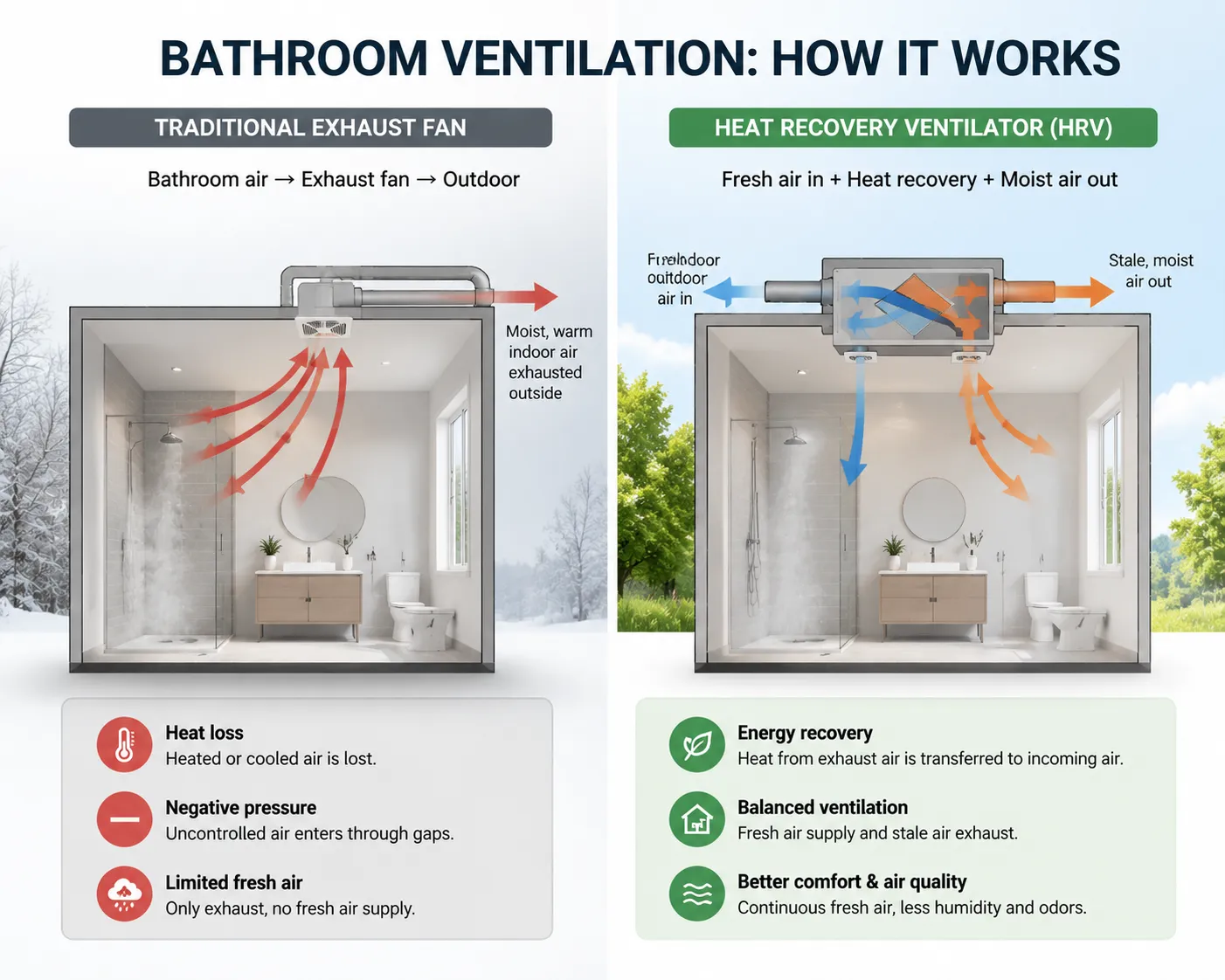
A heat recovery ventilator (HRV) is a balanced ventilation system that exchanges stale indoor air with fresh outdoor air while recovering energy from the exhausted air.
The basic process:
Humid indoor air → Heat exchanger → Outdoor
The two air streams pass through the heat exchanger without mixing. Energy from the outgoing air is transferred to the incoming air, reducing heating and cooling losses.
For projects where fresh air, humidity control, and energy efficiency are important, a heat recovery ventilation system provides a more complete solution than a traditional exhaust fan.
MENRED provides compact ventilation solutions designed for residential and small commercial applications. The BR300 micro-negative pressure ventilation system combines intelligent airflow control with continuous ventilation to improve indoor air quality and comfort.
How HRV Improves Bathroom Ventilation
1. Better Humidity Control
A heat recovery ventilator continuously removes humid indoor air while supplying fresh outdoor air.
- Condensation;
- Mold risks;
- Excess moisture;
- Unpleasant odors.
For bathrooms, especially in airtight apartments and renovated homes, controlled ventilation can significantly improve indoor comfort.
2. Reduced Energy Loss
The key advantage of HRV technology is energy recovery.
Instead of simply exhausting conditioned air, the system transfers heat between outgoing and incoming airflow.
- Lower heating demand in winter;
- Reduced cooling load in summer;
- Improved overall energy efficiency.
3. Balanced Indoor Air Quality
Modern buildings are designed with better insulation and tighter envelopes.
While this improves energy efficiency, it also reduces natural air leakage.
A controlled ventilation system helps maintain:
- Continuous fresh air;
- Stable airflow;
- Healthier indoor environments.
Exhaust Fan vs HRV: Key Differences
| Feature | Exhaust Fan | HRV System |
|---|---|---|
| Removes humid air | Yes | Yes |
| Provides fresh air | No | Yes |
| Heat recovery | No | Yes |
| Energy efficiency | Limited | High |
| Airflow control | Basic | Balanced |
| Negative pressure | Common | Reduced |
| Suitable for airtight buildings | Limited | Excellent |
When Should You Choose an Exhaust Fan?
An exhaust fan remains a practical option for:
- Small bathrooms;
- Simple renovation projects;
- Buildings without strict energy requirements;
- Applications where only moisture removal is required.
For basic ventilation needs, exhaust fans provide an economical solution.
When Should You Choose an HRV System?
A heat recovery ventilation system is recommended for:
Bathroom Renovation Projects
When improving insulation, replacing windows, or upgrading older buildings, controlled ventilation becomes more important.
Compact ventilation systems can provide fresh air without requiring complex duct installation.
For renovation applications, MENRED’s micro-negative pressure ventilation system offers a practical solution where traditional ducted ventilation may be difficult to install.
Apartments
- Require less installation space;
- Avoid large duct networks;
- Provide independent room ventilation.
Hotels and Commercial Buildings
- Guest comfort;
- Indoor air quality;
- Energy management.
Energy-Efficient Buildings
Low-energy buildings require ventilation solutions that minimize heat loss while maintaining fresh air supply.
How to Choose the Right Bathroom Ventilation System
Before selecting a ventilation solution, several factors should be considered:
Airflow Requirement
The ventilation capacity should match:
- Room size;
- Occupancy;
- Humidity generation.
Installation Conditions
Consider:
- Available wall space;
- Duct requirements;
- Electrical connection;
- Maintenance access.
Noise Level
Bathrooms are frequently occupied spaces. Low-noise operation improves user comfort and creates a more pleasant indoor environment.
Energy Efficiency
For modern buildings, heat recovery should be considered as part of the overall HVAC design. A ventilation system should not only remove moisture but also maintain indoor comfort with minimal energy loss.
Control Functions
Smart sensors and automatic operation can help maintain stable indoor conditions by adjusting ventilation according to humidity, air quality, and usage requirements.
MENRED BR300: Compact Ventilation Solution for Modern Buildings
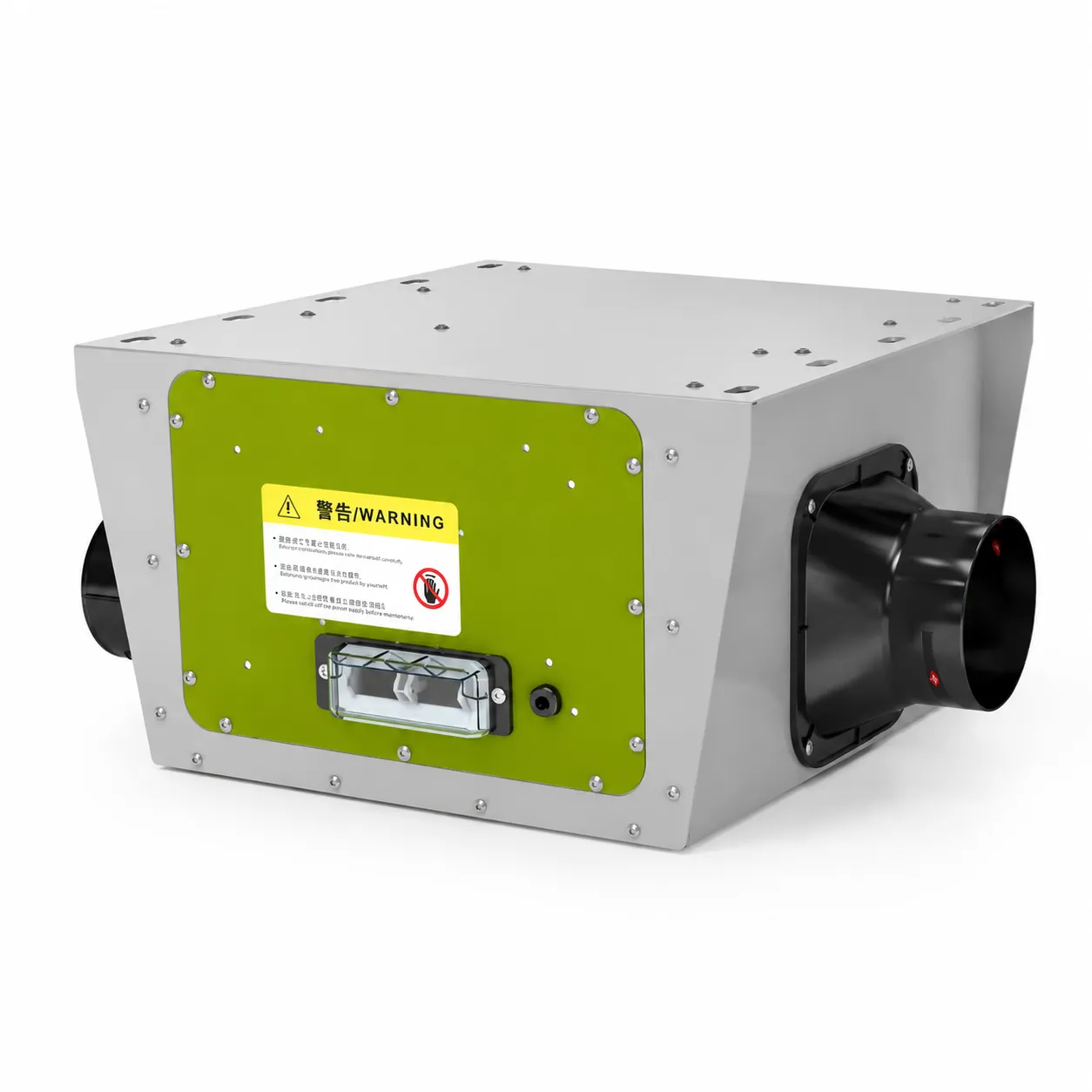
Product Highlight: MENRED BR300
The MENRED BR300 is a compact micro-negative pressure ventilation system designed for bathroom renovation, apartments, and small commercial applications where traditional ducted ventilation may be difficult to install.
- Continuous fresh air supply;
- Humidity and pollutant removal;
- Intelligent airflow adjustment;
- Quiet operation;
- Energy-efficient ventilation.
Unlike a simple bathroom extractor fan, BR300 focuses on controlled ventilation rather than only exhausting indoor air.
It provides a practical solution for projects requiring improved indoor air quality, humidity control, and fresh air circulation without major structural changes.
Learn more about the MENRED BR300 micro-negative pressure ventilation system:
MENRED BR300 micro-negative pressure ventilation system
Watch BR300 working in real applications:
BR300 ventilation system demonstration video
Conclusion
Traditional bathroom exhaust fans remain useful for simple ventilation requirements.
However, modern buildings require more than just removing humid air. Energy efficiency, indoor air quality, and controlled ventilation are becoming increasingly important factors in residential and commercial projects.
A heat recovery ventilator provides a smarter approach by combining fresh air supply, humidity control, and energy recovery.
For residential renovations, apartments, hotels, and energy-efficient buildings, HRV technology offers a more balanced ventilation solution.
MENRED provides ventilation systems, HVAC controls, and complete comfort solutions for modern residential and commercial applications.
Need a ventilation solution for your project?
Contact MENRED for ventilation systems, HVAC controls, and customized solutions.
Get a Free Quote